How Reuse Builds a Stronger Workforce and Economy

Innovating Through Market Shifts: How Sustainable Wine Packaging Can Shape the Future
June 19, 2025
Innovating Through Market Shifts: The Next Chapter
September 2, 2025When we talk about reuse, we usually lead with the environmental wins: lower emissions, less waste, fewer single-use bottles clogging up landfills. But there’s another side to reuse that doesn’t get enough airtime—it's power to build a better economy.
It’s easy to think of sustainability as something that costs more or requires sacrifice. What if we flipped that narrative? What if reuse wasn’t just a better option for the planet, but a smarter investment in people, skills, and local prosperity?
At Revino, we’re starting to see that firsthand.
The Shift from a "Take-Make-Dispose" World
Our traditional economic model has always been a linear one: we take resources, make a product, use it, and then dispose of it. This model is inefficient and unsustainable. However, the conversation is changing. As the Economist notes, the circular economy—a system where materials are kept in use for as long as possible—is no longer a niche concept. It's a strategic imperative for businesses and communities alike.
This shift is where reuse truly shines. Unlike recycling, which is an industrial process of breaking materials down to their raw components, reuse is a service-based process centered on the entire lifecycle of an object. This model requires a hands-on, human-centric approach: collection, transport, inspection, sanitization, and redistribution.
Reuse Isn’t Just Greener—It’s More Human
What happens after the bottle’s empty? When a Revino bottle is returned, its story is just beginning. It travels back to our washing facility in Portland, where it's meticulously cleaned, inspected, and prepped for another round. But behind that simple loop is something far more meaningful: a new kind of workforce, growing one bottle at a time.
According to Upstream and Eco-Cycle, reuse systems create up to 30 times more jobs per ton of packaging than landfilling—and far more than recycling, too. But it’s not just quantity. These jobs tend to be safer, cleaner, and more localized. They’re built around logistics, sanitation tech, inspection, and operational management—not standing next to a shredder or sorting contaminated recyclables.
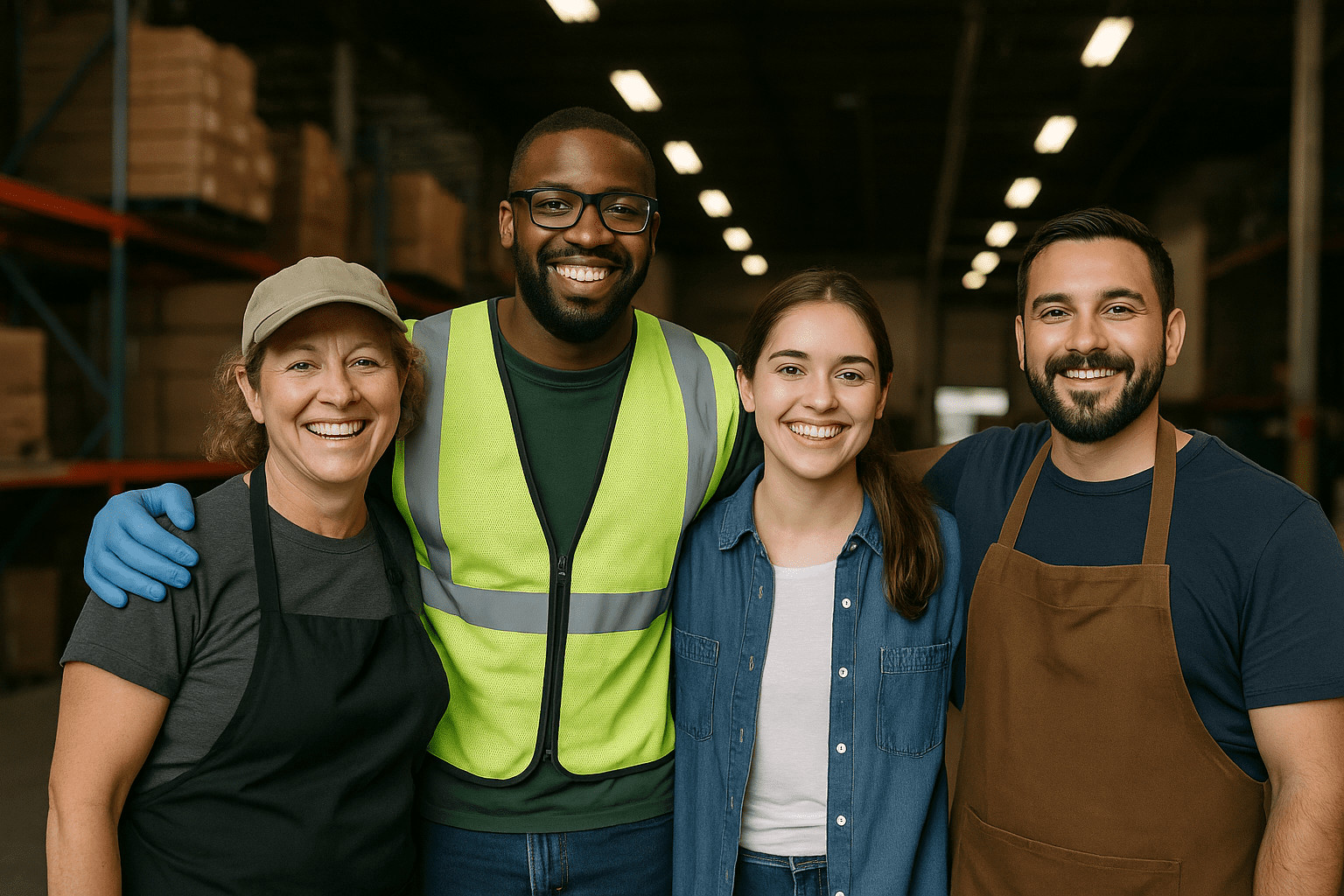
Who are the people washing those bottles? They’re not robots or invisible hands. They’re locals. They’re parents, students, sustainability-minded career-switchers, and tradespeople. They’re building new skill sets in a developed sector and acquiring aptitudes that can be developed further.
Designing for an "Un-Throwaway" World
A truly effective reuse system starts long before the bottle is even filled. It begins with a fundamental shift in design. You can’t simply reuse any bottle; you have to design for it. Our bottles are crafted to be durable, easy to clean, and fit seamlessly into a closed-loop system. We are part of a growing movement to create a world where products are intentionally made to be part of a circular system, not just a single-use product with an end-of-life date.
Here’s where the magic of reuse really unfolds. When bottles aren’t tossed out or melted down, they stay in motion, right here in our communities. That means:
- Glass manufacturing happens locally (we partner with O-I Glass in California and Washington).
- Return routes are staffed by regional drivers and logistics teams, supporting local businesses.
- Washing hubs offer jobs from entry-level technicians to project or quality assurance managers.
- Sales and partnerships grow from direct conversations with wineries and their consumers, not faceless global distributors.
Each part of the reuse loop strengthens the others. And as it grows, so does the chance to train, employ, and retain people in regenerative, future-proof industries.
A Different Kind of Green Job
The jobs created by a reuse economy are not just temporary gigs—they are career pathways. The movement to reuse is creating a new kind of "green job" that is both local and sustainable.
At Revino, it’s not theoretical. It’s scrubbing bottles to food-safe standards. It’s troubleshooting return logistics with a small winery. It’s training someone to run a high-resolution bottle inspection camera. It's organizing bottles by type, unpacking, and repacking. It’s not glamorous—but it’s meaningful.
People like Matthew Luisier at r.World or Natasha Wayne at Reaching All Minds Academy are showing us how reuse connects directly to education, workforce training, and multigenerational opportunity. The jobs we create today will become the careers and industries that anchor tomorrow’s circular economy.
So What’s the Big Picture?
Let’s be clear: we’re still at the beginning. Reuse isn’t yet the default in the U.S., but it could be. And as systems like Revino expand, they bring with them a vision that goes far beyond wine bottles.
It’s a vision where sustainability and economic justice aren’t at odds, where climate solutions don’t mean job losses, but job transformation, where reuse is not just about what we save, but what we build together. Every bottle returned is a small vote for that future. And that’s worth raising a glass to.
Sources & Further Reading
If you're curious to dive deeper into the data and stories behind reuse, workforce development, and the growing circular economy, here are some of the key resources that informed this post:
- Upstream: Just Transition & Reuse Workforce Development
- “Going Big: Jobs, Justice, and Reuse” — Upstream explores how reuse systems create more jobs and better jobs than traditional waste models.
- Read the full story
- Eco-Cycle & ILSR: Zero Waste Jobs Report
- Reuse and recycling compared to landfill and incineration: how local, circular systems create jobs and strengthen economies.
- Explore the report
- EPA Recycling Economic Information Report
- A federal perspective on the economic impact of recycling and reuse in the U.S.—including job numbers and wage totals.
- EPA REI Report
- RepaNet (Europe)
- A case study in how reuse infrastructure in Austria supports social employment, training, and circular economy growth.
- More on RepaNet
- OSHA Green Jobs in Recycling & Waste
- Safety and job quality metrics for recycling, reuse, and sanitation sector roles.
- OSHA Green Jobs Page
- Upstream: Reuse vs. Recycling — What’s the Difference?
- A simple breakdown of why reuse delivers bigger environmental and economic wins than recycling alone.
- Learn more
If you're a policymaker, producer, or community leader looking to explore reuse further, we'd love to talk. Revino is actively building regional models that can scale nationally, and we believe the future is reusable.
ABOUT REVINO: Revino provides wine bottle reclamation and sanitation services to Oregon wine producers while building a robust local and sustainable glass supply network. Their process operates in an infinite loop starting with bottle manufacturing and distribution, moving to consumption and redemption, and ending with bottle sanitization and reuse. Through their revolutionary RGBs and certified quality washing processes, Revino empowers wineries to embrace sustainability and make a significant positive impact on the environment.
For media inquiries, please contact:
Sarah Reid / PR for Revino
sarah@revinobottles.com