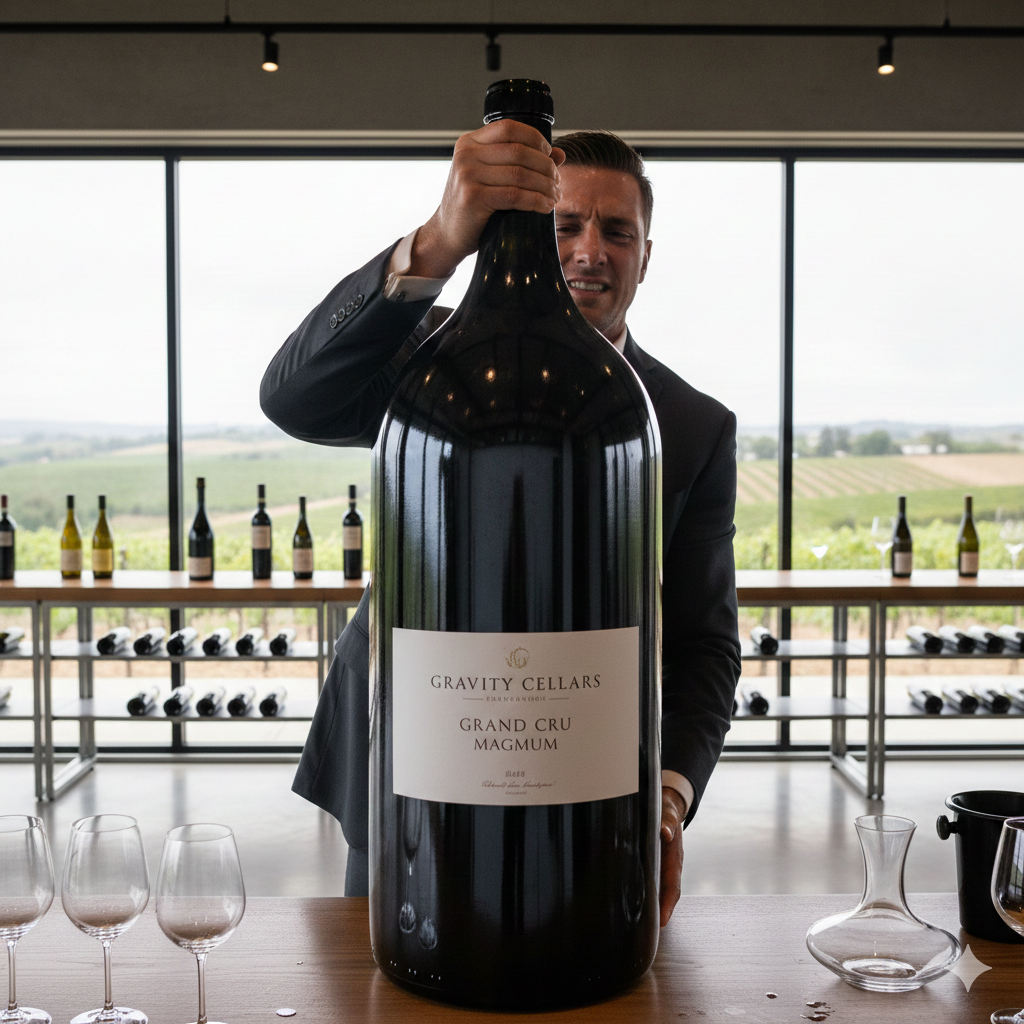
The Weight of Tradition: Why Heavyweight Bottles are Passé

Revolution in a Bottle: The Role of Student Voices in Circular Change
November 12, 2025
Why Dont Revino Bottles Have a Notch?
March 3, 2026The Weight of Tradition: Why Heavyweight Bottles are Passé.
When we talk about the Reuse Revolution, we usually lead with the numbers: an 85% reduction in emissions, bottles that can be reused up to 50 times, and the 3.6 billion wine bottles that currently clog U.S. landfills every year.
But there is a new, powerful front opening up in the fight for a circular wine economy—and it’s happening on the tasting tables of the world’s most influential critics.
For decades, the wine industry leaned into a "heavy glass" marketing ethos. The heavier the bottle, the more ‘premium’ the wine, right? Wrong. Today, that extra glass isn't just recognized as a sign of luxury; it's increasingly seen as a sign of environmental negligence. Now, a growing movement of sommeliers and professional tasters are doing something radical: they are refusing to score wines packaged in excessively heavy bottles.
What the Critics are Saying
In early 2024, Karen MacNeil, author of The Wine Bible and creator of WineSpeed, sent shockwaves through the industry. She announced that her publication would no longer review or score wines packaged in heavyweight bottles.
Her reasoning? By providing a "95-point" score to a wine in a 900-gram bottle, critics are inadvertently validating a marketing tactic that is actively harming the planet. As MacNeil puts it, these bottles are "environmentally irresponsible." When a critic refuses to score a wine, they strip away the winery’s most valuable marketing tool. It’s a move from passive observation to active accountability.
It’s easy to think, "We’re talking grams?" But in the world of carbon footprints, glass is the heavy hitter. Packaging and transport account for 30% to 65% of a wine’s total carbon footprint. Producing glass requires massive energy. Think furnaces that have to reach upwards of 1,500°C, for hours on end. When a winery chooses a "prestige" bottle that is 2-3x heavier than a standard bottle, it doubles the energy required for production and increases the fuel needed for shipping.
Jancis Robinson, another titan of wine criticism, has been a vocal leader in this shift. In her reviews, she now includes the physical weight of the bottle. By "naming and shaming" these "bodybuilder bottles," she is helping consumers see that the weight in their hand has a direct cost to the climate, our shared environment.
At Revino, we believe in designing for a world that doesn’t throw things away. That means challenging the psychological link between "heavy" and "good."
As noted by recent trends, bottles and labels that loudly proclaim their sustainable ‘street cred’, B-Corp certification in particular, are among the only wines surviving or gaining in sales despite the widespread downturn in wine sales. We believe the right packaging can reinforce these messages to consumers looking to ‘feel good’ about their purchases.
The truth is, there is zero correlation between bottle weight and wine quality. A lightweight, 400-gram bottle can age a world-class Cabernet just as well as a 1,000-gram behemoth. The difference? The lighter bottle doesn't carry the "carbon debt" of its heavier counterpart.
The Sustainable Wine Roundtable (SWR) recently launched the Bottle Weight Accord, a global effort to reduce average bottle weights. This isn't just a trend; it's a structural shift in how the industry defines excellence.
From Lightweighting to the Ultimate Goal: Reuse
While "lightweighting" (reducing the amount of glass in a single-use bottle) is a vital first step, the Reuse Revolution is the real destination.
A lightweight single-use bottle is better than a heavy one, but a reusable Revino bottle is the gold standard. Why? Because the most sustainable bottle is the one being used to its full potential, again and again.
- Single-use/ “Recycled” glass: Even if it’s light, it requires massive amounts of energy to melt down and remake (and in the U.S., less than 31% of it is truly recycled).
- Reusable Glass: Our bottles are designed for durability, not just weight. Revino bottles are still an eco-weight option at 495 grams, and they can be washed and refilled dozens of times, slashing emissions by 85% compared to any single-use glass, and becoming carbon neutral after the 3rd reuse.
Joining the Revolution
The critics are doing their part by changing the "score" of the game. Now, it’s up to us, the producers, the drinkers, and the community, to really change the system. Never forget your purchasing power!
When you see the Revino leaf motif on the neck of a bottle, you aren't just holding a premium wine; you’re holding a vote for a cleaner and circular future. You’re choosing a bottle that was designed with intention, not just for the shelf, but for the next fifty refills.
The era of the "heavy bottle" is ending. The era of the reusable bottle has begun. That’s a future worth raising a glass to.
Sources & Further Reading:
- WineSpeed, "Why We Are No Longer Reviewing Heavy Bottles," 2024.
- https://www.jancisrobinson.com/articles/bottle-manufacturers-take-note
- Ham&High UK. "How lighter bottles are reducing wines carbon footprint."
- Decanter. "Wine Bottles: A Heavy Price."
- Sustainable Wine Roundtable (SWR), "The Global Bottle Weight Accord."
- The Wine Bible, 3rd Edition, Karen MacNeil.
- Wine Searcher, ”Sustainable Labels Resist Slumping Sales,” December 2025
- Upstream, "The Environmental Impact of Glass Production and Logistics."
ABOUT REVINO: Revino provides wine bottle reclamation and sanitation services to Oregon wine producers while building a robust local and sustainable glass supply network. Their process operates in an infinite loop starting with bottle manufacturing and distribution, moving to consumption and redemption, and ending with bottle sanitization and reuse. Through their revolutionary RGBs and certified quality washing processes, Revino empowers wineries to embrace sustainability and make a significant positive impact on the environment.
For media inquiries, please contact:
Sarah Reid / PR for Revino
sarah@revinobottles.com