The Volume Effect: How Reusable Glass Stabilizes Our Supply Chain

Beyond the Bottle: Connecting Community to the Future Leaders of Sustainability
September 15, 2026When we talk about the Reuse Revolution, the conversation often centers on the environmental wins: an 85% reduction in carbon emissions, diverting tons of waste from landfills, and cutting down on raw material extraction. These metrics are vital, but they are only half the story.
The other half is pure economic resilience.
For years, the beverage and wine industries have treated packaging as a linear, disposable commodity: buy glass, bottle product, sell bottle, repeat forever. But as global supply chains fragment, energy costs surge, and tariff fluctuations create price volatility for raw materials, the single-use model reveals its greatest weakness: vulnerability.
True sustainability and financial stability in packaging come down to a foundational rule of circular economics: volume creates velocity, and velocity creates stability.
The Domino Effect of Volume in a Reusable Ecosystem
Transitioning a small fraction of bottles to reusable glass is a necessary start. But when producers make a commitment to shift large volumes of their production into pooled, standardized refillable glass, the market dynamic fundamentally transforms:
More Reusable Glass in Market ➔ Higher Return Rates ➔ Bigger Fleet of Ready Inventory ➔ Unbroken Supply Chains & Stabilized Costs
1. More Bottles in the Market = Higher Return Rates
A reuse system relies on habit loops and infrastructure. When a consumer encounters a reusable bottle once a year, returnability feels like a novel event. But when large-scale producers move significant volumes into reusable packaging, reusable glass becomes the standard expected on the shelf.
Higher volume creates ubiquity. Ubiquity justifies consumer drop-off infrastructure, retailer buy-in, and expanded collection logistics. The more bottles in circulation, the easier it is for consumers to return them—turning collection points into part of their routine and driving return rates exponentially higher.
2. A Reliable Buffer Against Supply Chain Disruption
In recent years, wineries and beverage producers have faced severe supply chain headaches: delayed overseas shipments, backlogged ports, and sudden shortages of standard molds.
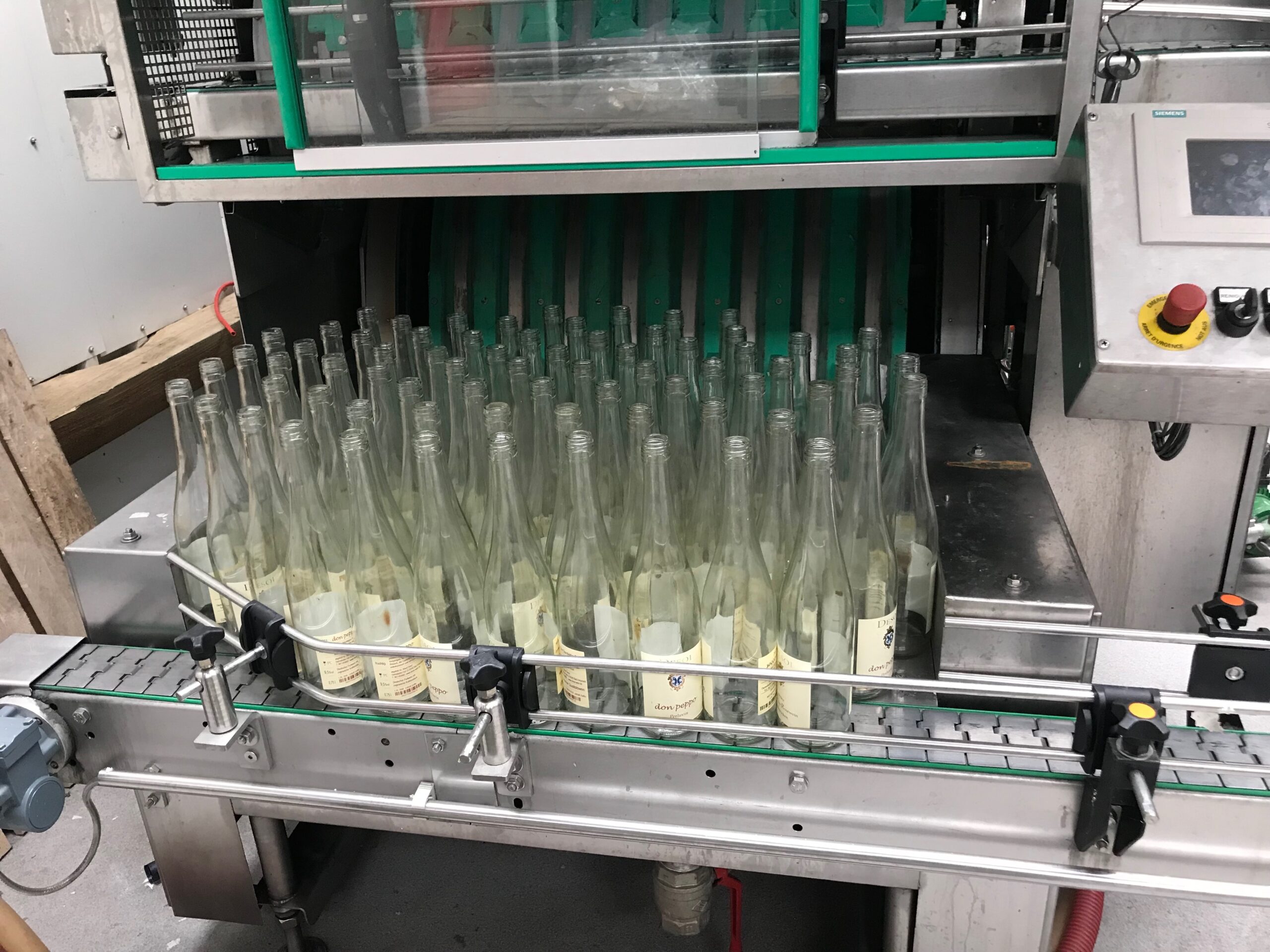
When you invest in reusable glass, you stop relying solely on a fragile global logistics network to deliver virgin glass for every single bottling run. Instead, you build a local, closed-loop supply bank. The bottles you filled last season are washed, inspected, and returned right back to your production floor—decoupling your business from global shipping bottlenecks and ocean freight volatility.
3. Lower Glass Costs & Long-Term Price Stabilization
Virgin glass production is an energy-intensive process tied directly to volatile energy prices and furnace costs. Buying single-use glass means paying for raw materials, high-heat manufacturing (1,500°C+), and long-distance transport every single time.
With reusable glass, the upfront investment pays dividends over the bottle’s lifecycle (up to 50 uses). As more producers join the pooled network, the unit economics of washing, logistics, and distribution plummet. Scaling the volume of shared, standardized glass lowers the cost per fill for everyone involved, shielding producers from inflation and erratic glass price spikes.
Shared Infrastructure: The Power of Pooled Packaging
No single producer should have to bear the burden of building a return ecosystem alone. That is why Revino built a pooled packaging model centered on standardized, high-performance glass designed specifically for circularity.
When multiple producers use standardized molds, every bottle returned strengthens the inventory pool for the entire region. A bottle poured in a tasting room or restaurant in spring can be washed and refilled by another partner winery by harvest—maximizing asset utilization and keeping local industry moving forward.
Join the Shift: Scaling the Bottle Economy
The Reuse Revolution isn’t just about opting into an eco-friendly alternative; it’s about reshaping the foundational economics of packaging.
When you transition large volumes of your packaging into reusable glass, you aren’t just making a statement about your brand’s values—you are actively investing in a localized, resilient bottle economy that protects your bottom line and safeguards the future of our industry.
Ready to help build the circular glass network? Explore our Winery Partner Toolkit or reach out to learn how moving your production to reusable glass can strengthen your supply chain.
ABOUT REVINO: Revino provides glass bottle and container reclamation and sanitation services to producers while building a robust local and sustainable RGB (reusable glass bottle) network. Their process operates in an infinite loop, starting with bottle manufacturing and distribution, moving to consumption and redemption, and ending with bottle sanitization and reuse. Through their revolutionary RGBs and certified quality washing processes, Revino empowers wineries and other producers to embrace sustainability and make a significant positive impact on the environment.
For media inquiries, please contact:
Sarah Reid / PR for Revino
sarah@revinobottles.com